Regular Class Aircraft — SAE INDIA Aero Design
Contributed to the Aviators International team’s parasol-wing aircraft for the SAE INDIA Aero Design competition at VIT. The project covers aircraft design and fabrication under takeoff, payload, and flight-plan requirements.
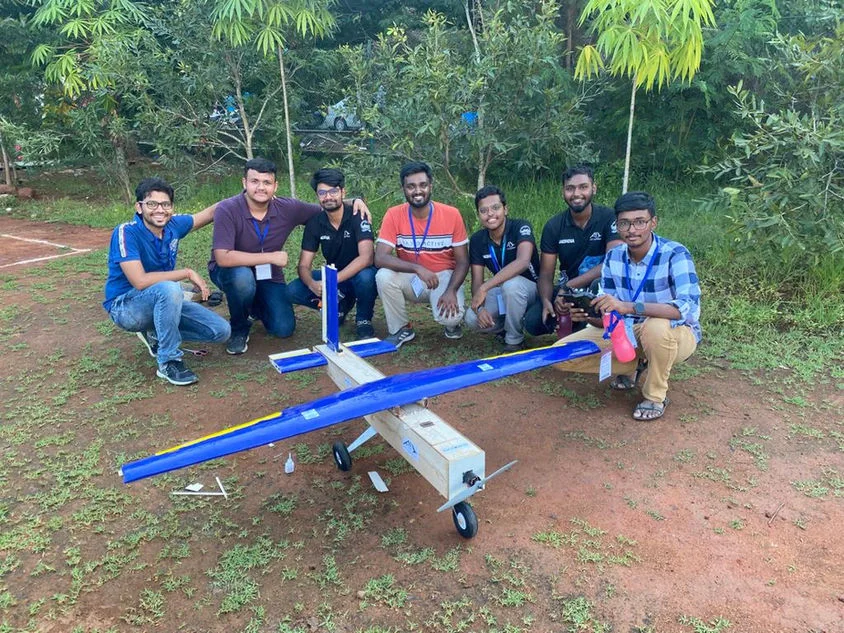
Technical work
Aviators International / VIT · Team aircraft design and fabrication
- Contributed to a parasol-wing aircraft for the SAE INDIA Aero Design competition, working within takeoff-distance, payload, stability, and flight-plan requirements.
- Participated in a design combining balsa ribs and fuselage panels, printed PLA spars, plywood supports, and aluminum landing-gear components with electric propulsion and LiPo power.
- Worked with the team through aircraft design and fabrication, documented in the technical presentation and final-aircraft photographs.
Team & Competition
Team: Aviators International Team of VIT
Competition: SAE INDIA Aero Design Competition
Period: 2022–2023
Overview
As part of the Aviators International Team of VIT, I contributed to the design and development of a Regular Class Aircraft for the SAE INDIA Aero Design Competition. This project challenged us to create an aircraft capable of meeting strict performance requirements while maintaining stability and safety throughout its flight envelope.
The team used a parasol-wing layout with balsa ribs and fuselage panels, printed PLA spars, plywood supports, and aluminum landing-gear components. The presentation and photographs document the design and fabricated aircraft.
Design Objectives
The competition requirements demanded strict adherence to several critical performance parameters:
- Takeoff Performance: Complete takeoff sequence within 100 feet of runway
- Flight Stability: Meet the presentation’s 400-foot flight/turn-envelope requirement; the source does not define this as altitude
- Maneuverability: Demonstrate precise turning capability with controlled banking
- Landing Safety: Execute safe landing procedures with minimal ground roll
Technical Specifications
Wing Configuration
- Design Type: Parasol-wing layout with elevated mounting
- Aerodynamic Optimization: High-lift airfoil selection for low-speed performance
- Wing Placement: Elevated mounting above fuselage for improved stability
- Structural Integration: Strut-braced design balancing structural support and mass
Materials & Construction
- Primary Structure: Balsa ribs and fuselage panels, with plywood supports
- Reinforcement Elements: Aluminum landing-gear components
- Advanced Manufacturing: Printed PLA spars and other design components
Power System
- Battery Configuration: Lithium Polymer (Li-Po) battery pack for high energy density
- Propulsion: Single electric motor with optimized propeller selection
- Flight Endurance: The presentation includes a 13.63-minute estimate, but its battery-capacity assumptions differ from the parts list; measured endurance is not established
- Power Management: Electronic speed controller (ESC) for efficient motor control
Design and Fabrication Results
- Completed the team’s parasol-wing design and fabrication work, documented in the technical presentation and final-aircraft photographs.
- Worked within a 100-foot takeoff-distance requirement and the specified flight/turn envelope.
- Integrated electric propulsion, structure, control surfaces, and landing gear into the aircraft design.
- Flight logs are needed to establish achieved takeoff distance, endurance, and repeatable landing performance.
Technologies & Skills
Learning Outcomes
- Aerospace Engineering Fundamentals: Practical application of aerodynamic principles, structural mechanics, and flight dynamics
- Design Process: Aircraft design process from concept and requirements through detailed engineering and fabrication
- Manufacturing Techniques: Hands-on experience with traditional woodworking, metalworking, and modern additive manufacturing
- System Integration: Coordinating multiple subsystems (structure, propulsion, control surfaces) into cohesive aircraft design
- Competition Experience: Working under strict requirements, timelines, and performance specifications