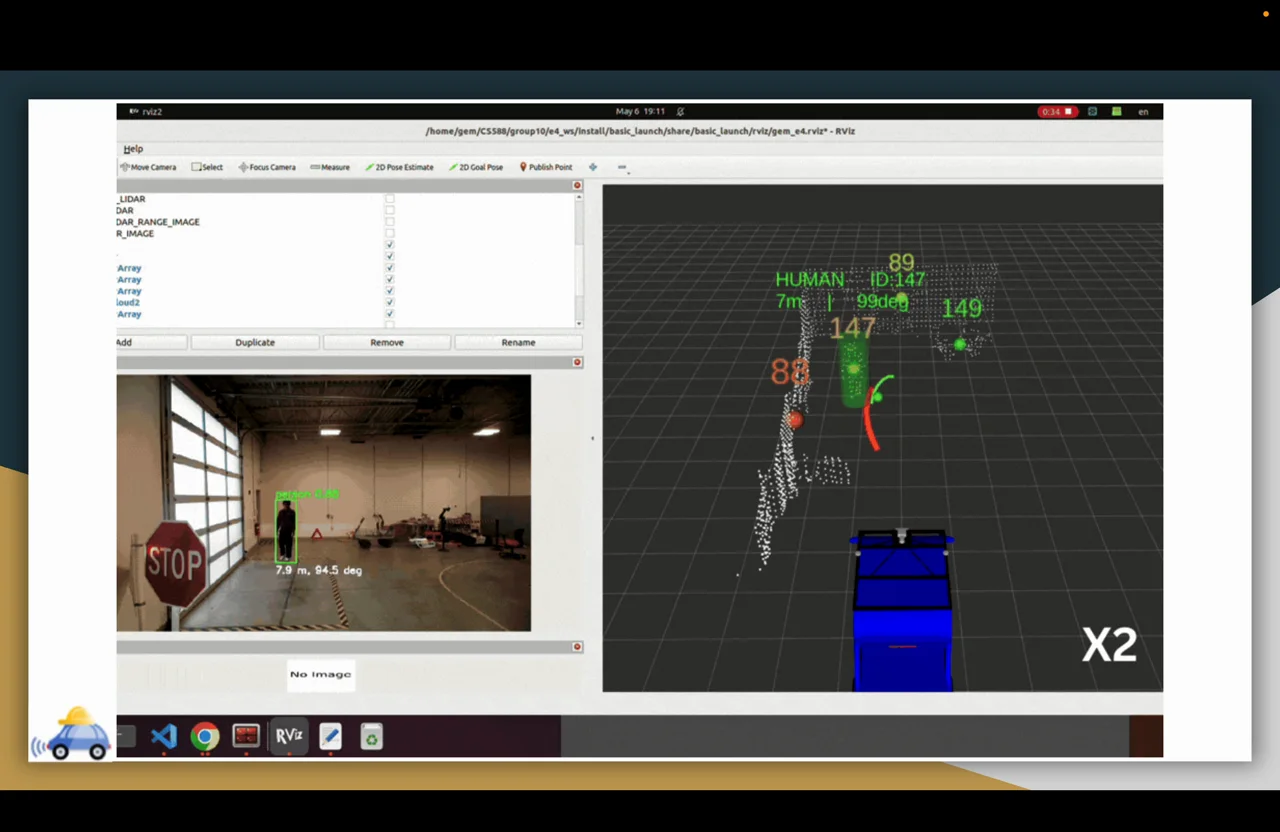
Pedestrian trajectory prediction, MPPI planning, and text-prompted navigation goals on a physical vehicle.
Team project · ROS 2 integration on Polaris GEM e4; prediction evaluated on Argoverse 2
Contributed to a ROS 2 Humble stack combining a GPU-batched MPPI planner and PACMod2 actuation; the planner optimizes steering and acceleration with a kinematic bicycle model, obstacle costs, and a TTC-based state machine.
Contributed to single-agent and joint diffusion prediction with cross-agent attention; the joint model reported 0.302 m minADE-20 and 0.532 m minFDE-20 on Argoverse 2 validation using 20 sampled forecasts.
The team’s predictor ran at approximately 11 ms for eight agents and 20 samples on an RTX 3060; the stack connects 10 Hz prediction to a configured 20 Hz planner with persistent trajectory selection.
The team stack generated text-prompted object goals through camera–LiDAR projection, point filtering, and DBSCAN, supporting vehicle integration and a planned three-configuration controller/predictor comparison.
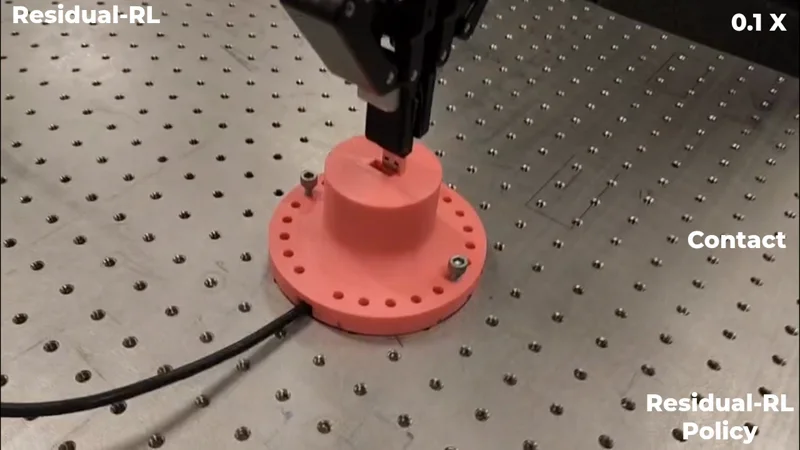
A learned insertion policy takes control at contact, addressing the precision gap between approach motion and USB seating.
MuJoCo training · OpenVLA in simulation · UR5e demo with scripted approach
Trained a six-joint Soft Actor-Critic policy for USB insertion in MuJoCo over approximately 21.6 million environment steps, tightening the cavity success criterion from 1.80× to 1.0625× through a staged curriculum.
Implemented a latched contact handoff to prevent repeated controller switching when the plug briefly loses contact; revised the depth reward to address policies that hovered at the port rim.
Built a 48-dimensional observation with joint state, port-relative error, force/torque history, and previous actions; randomized port pose, friction, sensor noise, and control latency during training.
Developed the ROS 2 deployment package for UR5e and Robotiq 2F-85, supporting a 100 Hz command loop and a real-arm insertion demonstration with a scripted approach.
≈21.6M training steps · 0.3 mm connector clearance
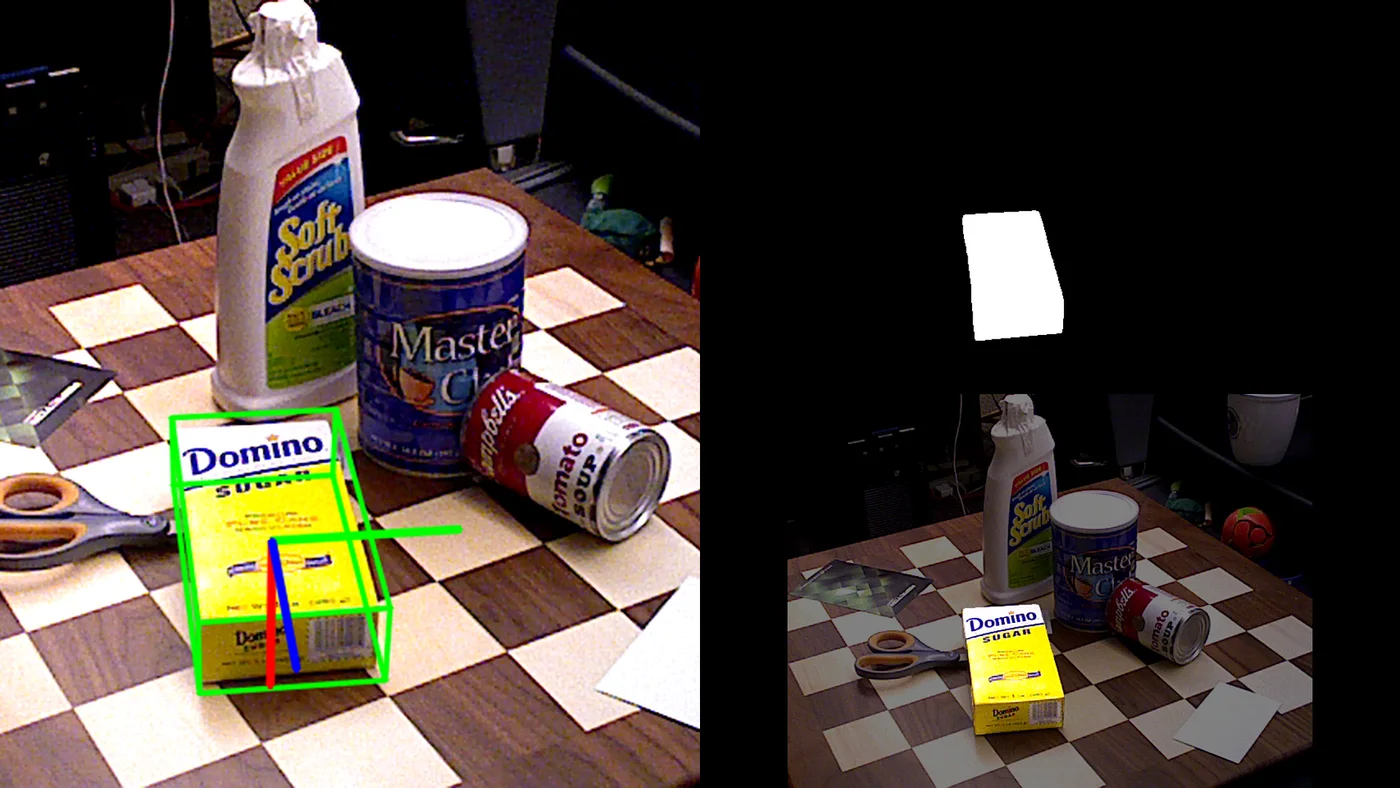
Led integration of SAM-3 segmentation with FoundationPose, coordinating mask generation, pose estimation, and dynamic language-guided target switching across the team’s perception pipeline.
The integrated pipeline recorded 88.31% mean ADD-S AUC across a 44-evaluation YCB-Video subset covering 18 objects and 787 frames; mean end-to-end processing time was 13.08 seconds per frame.
Integrated tracking with the team’s mesh-acquisition workflow, supporting benchmark CAD, Objaverse-XL retrieval, and experiments with single-image reconstruction.
Analyzed rotational symmetry, proxy-mesh mismatch, and segmentation latency; documented 44.23° mean rotation error and retained per-object results to expose failures hidden by the aggregate score.
Time-synchronized pedestrian perception and risk-dependent vehicle behavior with explicit stale-data handling.
Four-person team · Supervised tests on a physical Polaris GEM
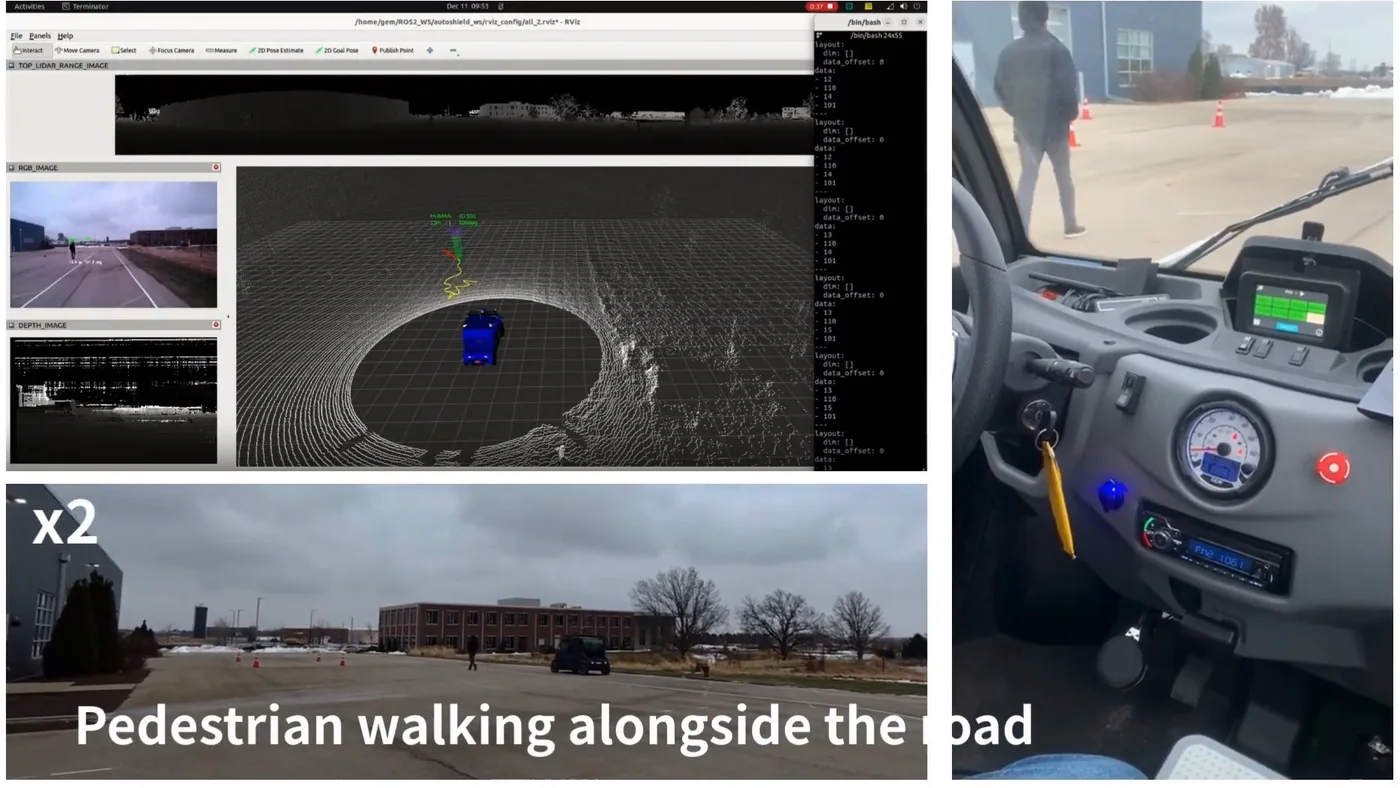
Implemented ROS 2 sensor fusion for Ouster LiDAR and YOLOv11/OAK-D detections using approximate synchronization, a 2 m association gate, and separate range/bearing weights.
Built TTC-driven cruise, caution, and yield decisions, issuing STOP_YIELD when perception data was older than 0.5 seconds and applying a 2-second recovery buffer before resuming cruise.
Implemented Stanley lateral control and the safety-control layer for speed selection and braking, connecting pedestrian risk estimates to the Polaris GEM’s vehicle controllers.
The four-person team reported 53 successes in 58 supervised scenario and controller tests, including 9/10 in each crossing condition and 8/10 for pedestrians walking along the road.
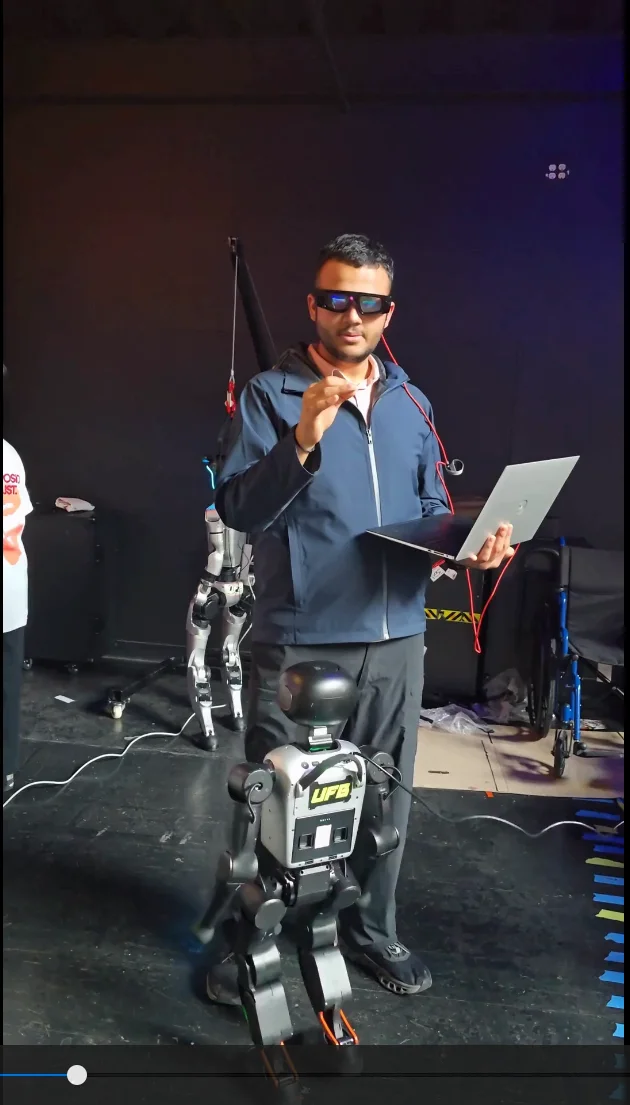
Snap AR Spectacles and a Booster K1 humanoid connect through ROS 2 for assistive interaction.
Cal Hacks 12.0 · Working assistive-robot prototype
Developed Booster K1 robot control and Snap AR integration, mapping head orientation to ROS 2 movement commands for an assistive-robot prototype.
Integrated robot camera streaming and AR interaction with the team’s WebSocket/ngrok communication layer, separating control traffic from video and supporting manual and patrol modes.
Contributed Gemini VLM and OpenCV functionality for human detection and interaction; collaborated with teammates responsible for SLAM/navigation and the AR communication interface.
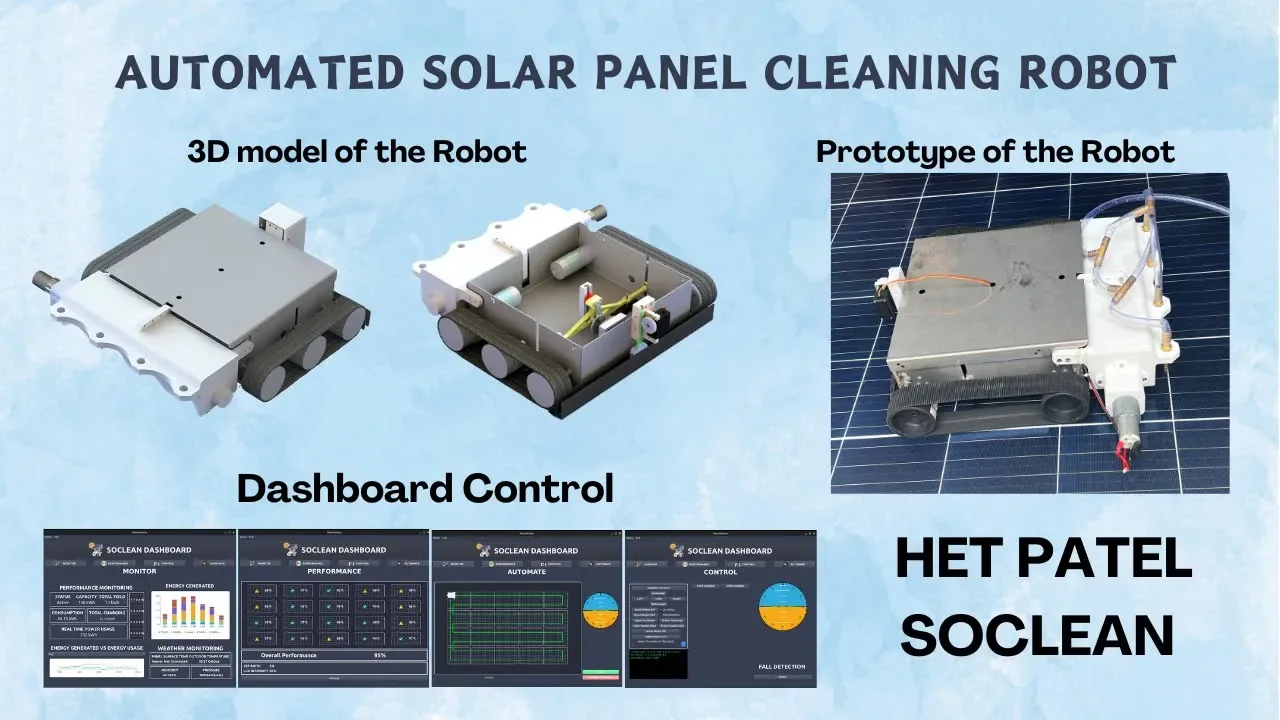
A tracked cleaning prototype with integrated actuation, wireless control, and a Qt dashboard.
VIT capstone · Fabricated and tested prototype
Built an ESP32-controlled cleaning prototype combining tracked drive, a roller brush, four-nozzle water delivery, a servo brake, and a rack-and-pinion wiper.
Developed a Qt6 dashboard for UDP control of drive and cleaning actuators, Firebase REST sensor monitoring, and route definition for planned cleaning patterns.
Designed stainless-steel chassis and cleaning assemblies for CNC cutting, bending, TIG welding, and printed parts; documented prototype trials on solar panels.
Sized a 4,200 mAh battery against an estimated 16 A actuator load, calculating approximately 10–13 minutes of operation after allowances for losses.
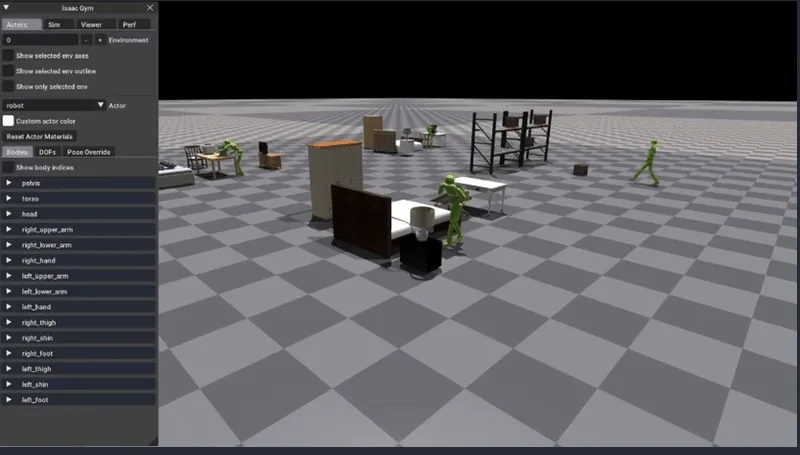
A study of shared visual-language representations for humanoid object rearrangement.
Three-author research design study · CLIP performance values are hypothetical estimates
Co-developed a course-project study of CLIP image and text representations within HumanVLA for language-conditioned humanoid object rearrangement in the HITR task setting.
Designed a student-policy variant with 128-dimensional adapters for visual and language embeddings, combining those representations with proprioception and previous actions for control.
Documented a privileged teacher–student design using behavior cloning and DAgger, with a proposed comparison of frozen and trainable visual encoders under the same action decoder.
Defined task-completion, placement-error, and execution-time metrics for evaluating the proposed encoder variants.
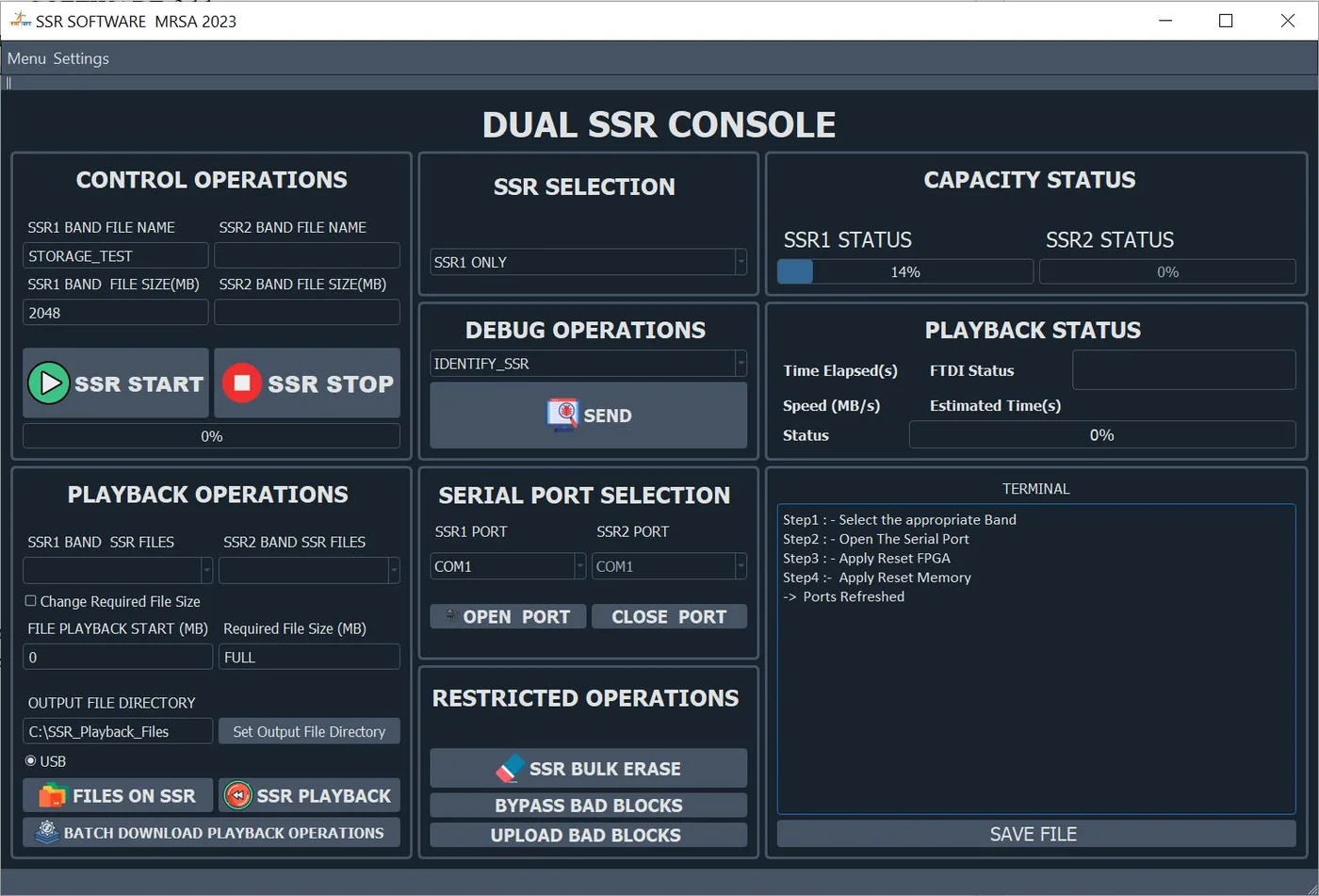
C++/Qt application software for recording control, diagnostics, and data download from an indigenous solid state recorder.
ISRO / Space Applications Centre · Internship project
Ported a recorder operator console from legacy Microsoft Visual C++ to Qt, exposing recording, playback/download, erasure, and hardware-diagnostic controls.
Connected the host application to recorder hardware using framed serial commands and USB 2.0 playback, with file metadata, storage-capacity display, and timestamped diagnostic feedback.
Added operator controls for bad-block lists and recorder resets to support hardware checkout and troubleshooting.
A conservation hexacopter design exploring surveillance, a perching mechanism, and medication-support missions.
Engineering design study · Calculated performance
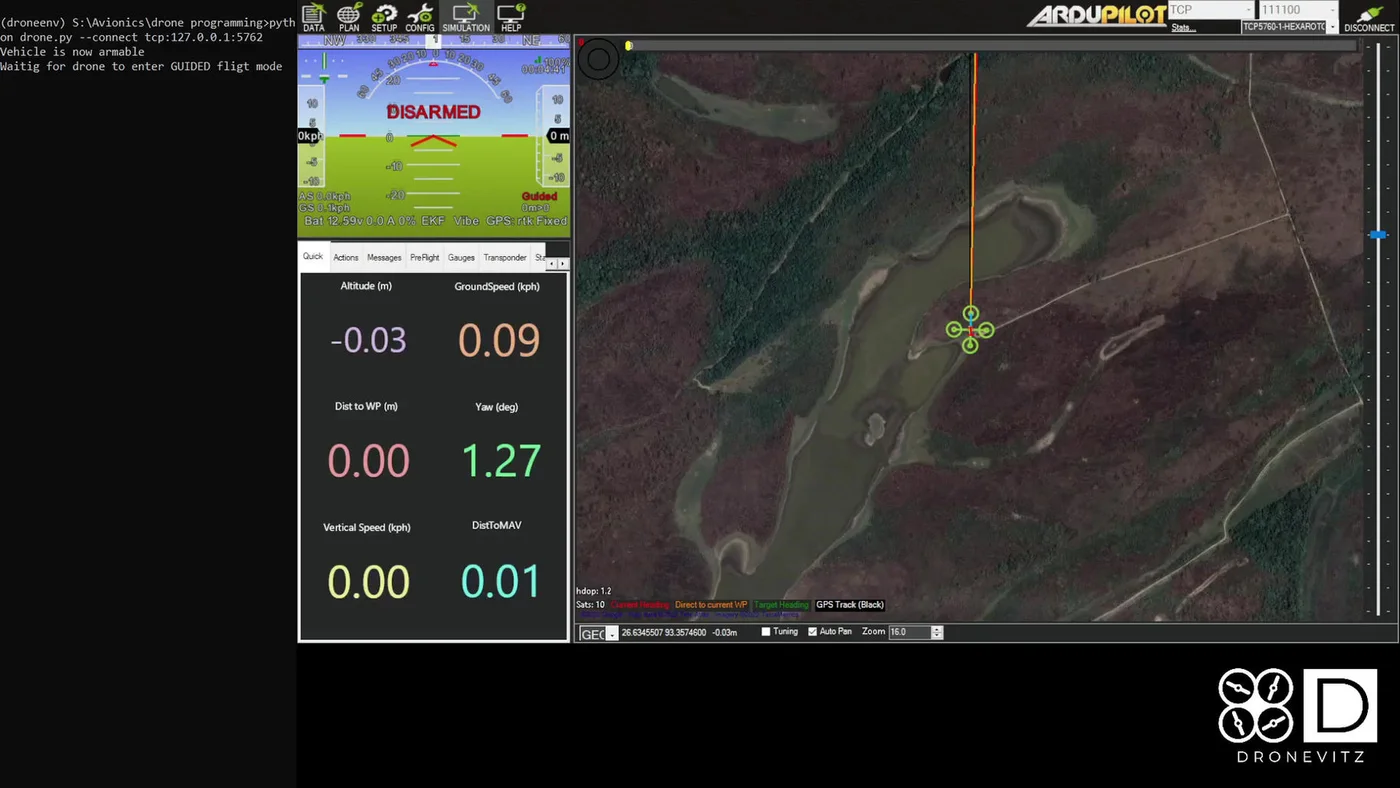
Designed a hexacopter concept around a Pixhawk controller, Raspberry Pi companion computer, six motors, and a 30 Ah battery for wildlife-surveillance and medication-support missions.
Produced CAD, circuit, and mission-planning designs incorporating a tree-perching claw and six ultrasonic sensors for proposed obstacle sensing.
Calculated 40.54 minutes of ideal endurance from a 44.4 A propulsion-current estimate and 30 Ah capacity for an approximately 8.4 kg design.
A parasol-wing aircraft developed with Aviators International for the SAE INDIA Aero Design competition.
Aviators International / VIT · Team aircraft design and fabrication
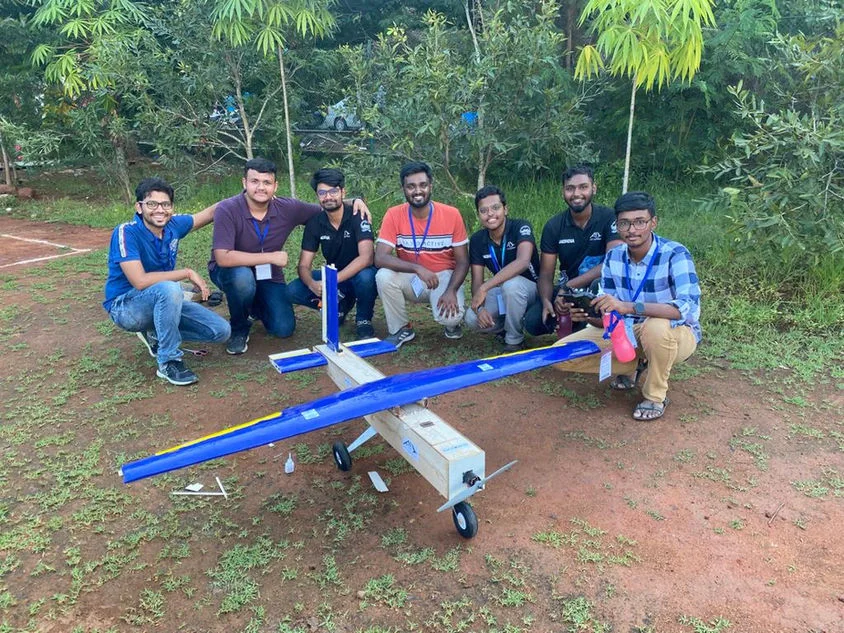
Contributed to a parasol-wing aircraft for the SAE INDIA Aero Design competition, working within takeoff-distance, payload, stability, and flight-plan requirements.
Participated in a design combining balsa ribs and fuselage panels, printed PLA spars, plywood supports, and aluminum landing-gear components with electric propulsion and LiPo power.
Worked with the team through aircraft design and fabrication, documented in the technical presentation and final-aircraft photographs.
Developing AutoMap, a hybrid indoor navigation system that couples visual SLAM with a cloud-hosted vision-language model for environmental reasoning and localization.
Building autonomous exploration and mapping workflows with graph representations of large indoor facilities, connecting local geometric maps with facility-scale navigation.
Deploying the local navigation stack on Jetson Orin Nano and integrating cloud VLM inference into lost-localization recovery, with a sub-10-second engineering target.
Contributing to VLM fine-tuning through the physical agents and environmental reasoning agents teams, supporting AutoMap’s navigation and environmental-intelligence work.
Visual SLAMVLM fine-tuningSpatial reasoningJetson Orin Nano
Jul 2024 – Aug 2025
Autonomy in the field
Vinayak Technology
Robotics Engineer
Ahmedabad, India
Developed and deployed a ROS 2 autonomy stack for construction-site material transport, connecting perception, localization, planning, and control across GPS-denied routes longer than 200 m.
Developed LiDAR–inertial localization and NDT alignment workflows for repetitive indoor geometry, working with LIO-SAM and FAST-LIO2 in mapped environments of approximately 2,000 m².
Integrated 3D LiDAR, IMU, wheel encoders, and RGB-D cameras through custom ROS 2 drivers; co-defined sensor placement and implemented online extrinsic calibration for realignment after on-site impacts.
Built an Isaac Sim digital twin with tuned inertia, contact, and actuator models to compare simulated trajectories with field behavior and support on-site commissioning.
ROS 2LiDAR–inertial SLAMSensor fusionIsaac Sim
May 2023 – Jan 2024
Recorder interfaces & cabin displays
Indian Space Research Organisation
Embedded Software Research Intern
Ahmedabad, India
Developed a C++/Qt operator application for an indigenous Solid State Recorder for SAR payloads, replacing a legacy interface and controlling recorder operations over UART/RS-232.
Implemented recording controls, host-side file management, and USB 2.0 data downloads, with recorder status, diagnostic commands, and bad-block management controls for hardware checkout.
Contributed to Gaganyaan cabin-display software using C++, OpenGL ES, and PetaLinux on a Xilinx platform.
Benchmarked YOLOv4, R-CNN, and BiT for food recognition on a smart-refrigerator edge device.
Selected and deployed YOLOv4 with TensorRT optimization, connecting the food-recognition model to the device’s inference pipeline.
Built a data pipeline synchronizing on-device detections with cloud inventory records to support automated food tracking; received a Samsung PRISM Excellence Award.